
So you’ve been listing your products on Alibaba, waiting for inquiries to come in, and they do, sometimes. But somewhere along the way, you start asking yourself, ‘Why is it so hard to actually stand out here? ‘
You’re not alone in thinking that.
A lot of manufacturers across India are going through the same thing right now. More suppliers entering the same category, costs going up, and inquiries that somehow never turn into real orders. It starts to feel like you’re pouring money into a platform that’s simply too crowded for your business to breathe.
That doesn’t mean Alibaba is done. It’s still one of the largest B2B marketplaces in the world, no question about it.
But the reality in 2026 is that a growing number of manufacturers are actively searching for websites like Alibaba’s that offer better visibility, stronger lead quality, and a real shot at long-term growth without constantly fighting for space in a crowd.
This guide breaks down the best Alibaba alternatives available today, including one that’s taking a completely different approach to how manufacturers grow online.
Why Are Businesses Looking for Websites Like Alibaba?
Before we get into the list, it’s worth understanding what’s actually pushing manufacturers to look beyond traditional marketplaces.
1. Getting Noticed Has Become Much Harder
The visibility is a real problem when there are hundreds of suppliers with almost the same products in the same category. Even businesses with genuinely great products often struggle to separate themselves from the noise.
2. More Inquiries Doesn’t Always Mean More Business
The change happening now isn’t just about getting more leads; it’s about getting quality leads. Ten relevant, qualified inquiries will almost always outperform a hundred generic ones that go nowhere.
3. Staying Visible Costs More Over Time
To stay at the top, many businesses end up spending heavily on premium listings, paid promotions, and ads. That adds up fast, and over time, it quietly inflates the real cost of acquiring a customer.
4. Buyers Are Overwhelmed by Similar Options
From the buyer’s side, seeing dozens of similar suppliers makes decision-making slower and harder. That means more competition for you, with less guarantee of actually winning the business.
5. Manufacturers Want More Than Just a Listing
What manufacturers are really looking for today goes well beyond a product page on a marketplace. They want:
- Genuine online visibility
- Better rankings on Google
- Qualified B2B leads that convert
- Long-term growth that doesn’t depend entirely on paid spend
- Lower competition within their own category
This is exactly where some newer B2B platforms are beginning to stand apart.
What Makes a Good Alibaba Alternative in 2026?
Not every marketplace delivers the same kind of value. The ones worth your time will typically offer a combination of quality lead generation, better supplier visibility, lower internal competition, SEO support, and cost-effective ways to grow. Platforms that tick most of those boxes are the ones where manufacturers are actually seeing results.
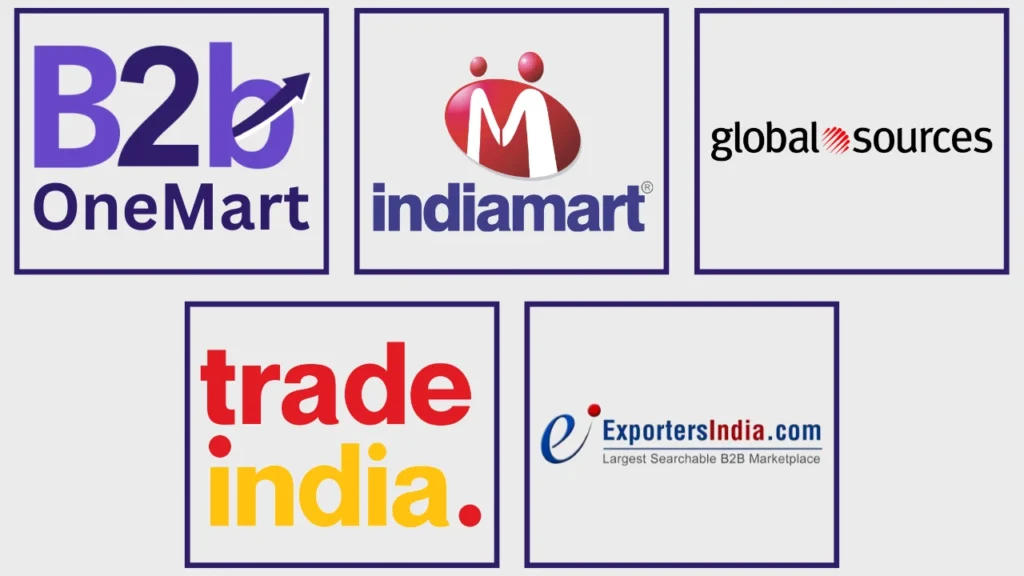
Top 5 Alibaba Alternatives in 2026
1. B2BONEMART
While going through the list of websites like Alibaba in India, one platform kept coming up for a very different reason because it does things in a way that most marketplaces simply don’t.
B2BONEMART follows a category-exclusive model. Instead of onboarding multiple manufacturers for the same product category, they allow only one manufacturer per category. That single decision changes everything about how visibility and competition work on the platform.
What Makes It Different?
- One manufacturer per category, no competition
- Exclusive ownership of your category
- Focus on quality business leads, not just inquiry volume
- SEO-driven growth built into the model
- Dedicated visibility for the manufacturer in that space
- Lead support within 60 days of joining
- Plans starting around ₹25,000/month
The interesting thing about how this platform operates is that it’s built around visibility rather than volume. Most marketplaces grow by adding more and more suppliers. B2BONEMART instead focuses on helping the manufacturers already on the platform get more exposure, which is a fundamentally different philosophy.
For manufacturers who want to understand how this kind of approach actually translates into rankings, there’s a useful breakdown in this piece on how manufacturers start ranking in 2 months; it walks through the practical SEO steps behind faster visibility.
On the cost side, it’s worth thinking about what most manufacturers are already spending. Many are paying ₹50,000–₹60,000 every month between separate SEO agencies and lead-generation campaigns. B2BONEMART combines both under one model, which makes the math look a lot more manageable for businesses that want predictable, consistent growth.
2. IndiaMART
IndiaMART is still one of the most recognised B2B marketplaces in the country, and for good reason.
Features: Large buyer base, extensive product categories, lead management tools, strong domestic market focus.
Pros: High visibility, established reputation, easy onboarding process.
Things to Consider: Categories can get heavily competitive. Lead quality varies. Premium plans are often necessary to get meaningful exposure.
Best For: Manufacturers looking for broad exposure across the Indian market.

Global Sources has a solid reputation among international buyers and exporters who are serious about cross-border trade.
Features: Global sourcing network, verified suppliers, trade show integration, access to international buyers.
Pros: Strong export opportunities, trusted buyer community, genuinely global reach.
Things to Consider: Better suited for businesses with an export focus. Competes among suppliers in popular categories.
Best For: Manufacturers targeting overseas markets and international trade.
4. TradeIndia
TradeIndia continues to be a go-to Alibaba alternative in India for small and medium manufacturers who want an affordable way to get online.
Features: supplier directories, lead generation tools, product promotion options, and business verification services.
Pros: Large supplier network, decent domestic reach, affordable plan options.
Things to Consider: Competition in popular categories is significant. How visible you are often depends on which plan you’re on.
Best For: Small and medium manufacturers looking to build their online presence without heavy upfront investment.

ExportersIndia focuses on connecting suppliers with both domestic and international buyers, with a particular lean toward export sectors.
Features: B2B marketplace listings, export-focused opportunities, product promotion tools, and business catalogs.
Pros: Export visibility, relatively easy setup, wide industry coverage.
Things to Consider: Faces similar competition challenges to larger marketplaces. Lead quality can vary depending on the industry.
Best For: Businesses building visibility in export-orientated sectors.
Alibaba vs B2BONEMART: Side-by-Side Comparison
| Feature | Alibaba | B2BONEMART |
|---|---|---|
| Manufacturers Per Category | Multiple | One |
| Competition | High | Category Exclusive |
| Category Visibility | Shared | Dedicated |
| SEO Growth Focus | Limited | Core Strategy |
| Lead Generation Approach | Volume Focused | Quality Focused |
| Monthly Cost Structure | Varies | Approx. ₹25,000 |
| Business Growth Support | Marketplace Listing | Visibility + Lead Support |
Why More Manufacturers Are Paying Attention to B2BONEMART
One manufacturer. One Category.
The core differentiator here is straightforward: one category belongs to one manufacturer. That eliminates the internal competition that makes most marketplaces frustrating, and it gives businesses the ability to genuinely own their category visibility, not share it with dozens of competitors.
Built Around Quality Leads
Rather than pushing inquiry numbers as the headline metric, the platform is built around connecting manufacturers with business opportunities that are actually relevant. It’s a different measure of success and one that aligns better with how real B2B sales work.
SEO Growth Is Part of the Package
A lot of manufacturers end up running separate budgets for marketplace listings and SEO services. B2BONEMART folds them both together, which is where a lot of the value case comes from. For manufacturers who want to understand the broader picture of how SEO for manufacturers works and why it matters, it’s worth reading up on the strategies that actually move the needle for industrial and B2B businesses.
Cost vs Value
Compared to maintaining a separate SEO retainer and running ongoing paid campaigns, the all-in model offers a relatively predictable growth cost. For manufacturers who’ve been frustrated by the hidden problem behind slow manufacturing growth, where the real issue isn’t the product but the visibility, this kind of structured approach addresses the root cause rather than patching around it.
What Manufacturers Are Actually Seeing
Businesses on the platform commonly report improved category visibility, better Google rankings over time, more consistent inquiry flow, stronger buyer engagement, and an overall uptick in online presence.
Conclusion
If you just need to be present on a large global marketplace, Alibaba is still a strong option, and there’s no reason to walk away from it entirely.
But if you’re searching for websites like Alibaba because you want something more — stronger visibility, dedicated category positioning, higher-quality inquiries, and growth that compounds over time rather than depending on constant paid spend — there are now serious alternatives worth considering.
Among them, B2BONEMART stands out because it’s approaching B2B growth from a genuinely different angle. Instead of placing manufacturers into crowded categories and hoping for the best, it’s built around category exclusivity, SEO-driven visibility, and lead generation that’s focused on quality.
For manufacturers who are planning long-term, it’s also worth putting together a proper marketing guide for manufacturers and making sure your Manufacturer Website Must-Haves to Rank & Get B2B Leads are in place, because the platform you list on is only part of the equation. How buyers find you and what they land on matters just as much.
Questions Manufacturers Actually Ask Before Switching Platforms
Q1. I'm already on Alibaba and getting some inquiries. Why should I even bother looking at other platforms?
Inquiries are fine, but if they’re not converting, the platform isn’t really working for you. As more suppliers enter the same category, your visibility shrinks unless you keep spending more to stay relevant. That’s when it makes sense to explore what else is out there.
Q2. What's the actual difference between being on a big marketplace and being on something like B2BONEMART?
On a big marketplace, you’re one listing among hundreds. On B2BONEMART, you’re the only manufacturer in your category. That single difference changes how buyers find you, how Google ranks your page, and how seriously an inquiry is when it comes in.
Q3. Is IndiaMART still worth it in 2026, or has it gotten too crowded?
Still worth it for domestic reach, but popular categories are heavily competitive. Visibility without a premium plan is limited. It works best as one channel among several, not your entire strategy
Q4. My product isn't very niche; does category exclusivity even help someone like me?
It helps you more than anyone. When hundreds of suppliers make the same thing, competing on a shared page always comes down to price. Category exclusivity removes that entirely. It’s the difference between being compared and being chosen, and that’s exactly the hidden problem behind slow manufacturing growth that most manufacturers never address.
Q5. How long does it realistically take to see results from SEO-focused platforms?
Most manufacturers start seeing movement within 6 to 10 weeks when their platform presence is backed by decent on-site SEO. There’s a solid breakdown of exactly how that timeline works in this piece on how manufacturers start ranking in 2 months it’s worth reading if you want to know what’s actually happening under the hood.
Q6. Between a separate SEO agency and a platform like B2BONEMART, which makes more financial sense?
Do the math. A separate SEO agency plus paid marketplace promotions can easily run ₹50,000–₹60,000 a month with fragmented results. A bundled model at ₹25,000 that handles both is worth a serious look. Understanding SEO for manufacturers properly also helps you ask the right questions before spending anything.
Q7. Can smaller manufacturers compete on these platforms, or is it mostly for big exporters?
Smaller manufacturers actually benefit the most, especially on category-exclusive platforms where budget size doesn’t determine visibility. Size stops mattering when you’re not fighting for the same page as someone with a bigger ad spend.
Q8. I've tried multiple platforms before, and none delivered. What would actually be different this time?
Platform-hopping without fixing the root cause rarely works. Usually, the issue is either too much competition or a weak online presence. The manufacturers who see consistent results treat their platform listing and their own website as two parts of the same strategy. A proper marketing guide for manufacturers and making sure your manufacturer website has the right foundations make everything else work harder.