
Solder Bar Manufacturer & Supplier in India
Bulk solder bars for wave, dip, selective soldering, HASL and hot-dip tinning pots — manufactured in-house in Ahmedabad, Gujarat and supplied across India.
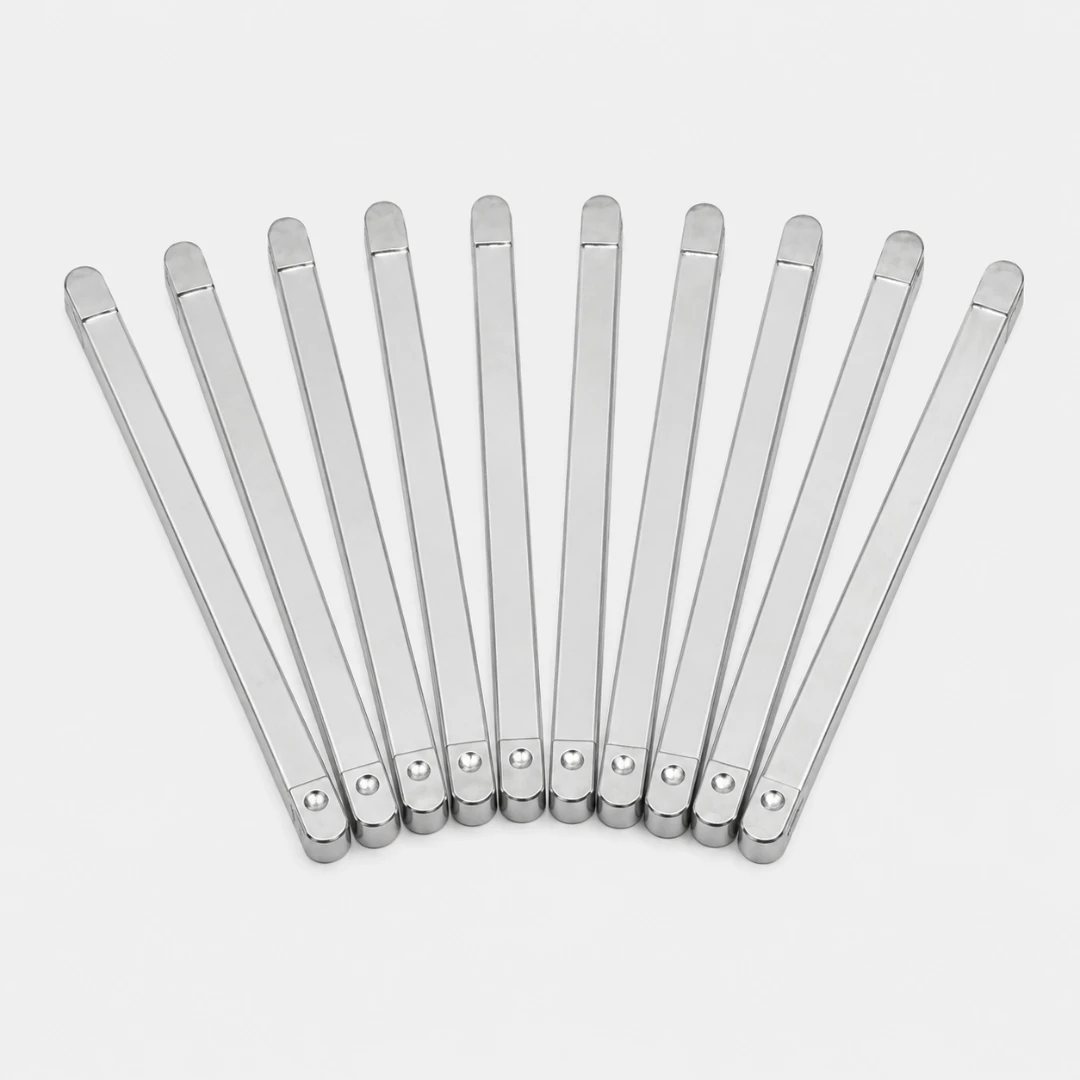
Sticks are hand-fed, one piece at a time, by an operator standing at the work. A solder bar is the machine's version of the same metal — a cast charge dropped into a melt pot that has to hold its level, its alloy and its behaviour shift after shift.
Tell us the alloy your line is validated on, your monthly quantity and the packing you need, and we will quote against that exact requirement. Every lot is backed by a batch spectro test certificate.
Why Buy Solder Bar Direct From the Manufacturer
A large share of the listings you will find for solder bar in India belong to traders waiting on somebody else's melt. ACE Power Systems melts, alloys and casts in-house at our own unit in Ahmedabad, Gujarat — so the metal that goes into your pot has one source, one process and one set of records behind it.
For a production reader that matters in a very practical way. The alloy that behaved a certain way in your bath last month should behave the same way next month, and when your QA asks where a lot came from, there is an answer.
- In-house manufacturing — melting, alloying and casting under our own control
- High-purity raw material
- Lead-free / RoHS-compliant manufacturing
- Bulk supply capability for scheduled, repeat monthly requirements
- Supply across India, dispatched from Ahmedabad, Gujarat
Solder Bar Grades We Supply
Grades commonly specified for machine-fed pots. Tell us the grade your process is validated on and we will come back to you on what we can supply — we do not ask you to change your alloy to suit us.
Sn63/Pb37 Solder Bar
The eutectic tin-lead alloy: it melts and freezes at a single point of 183 degrees C with no pasty stage. That instant freeze is why it stays the reference alloy for wave and dip soldering of PCBs.
Get a QuoteSn60/Pb40 Solder Bar
Solidus 183 degrees C, liquidus around 188 to 190 degrees C. The everyday commercial tin-lead workhorse for machine soldering and general production pots.
Get a QuoteSn50/Pb50 Solder Bar
Melting range 183 to 212 degrees C. Used for general machine soldering, coppersmith work and dipping baths where a wider pasty range is acceptable.
Get a QuoteSAC305 Lead-Free Solder Bar
Sn96.5/Ag3.0/Cu0.5. Melts at roughly 217 to 220 degrees C and is typically run in a wave pot at about 255 to 265 degrees C. The mainstream lead-free electronics alloy; datasheets for it cap residual lead at 0.07 percent or lower.
Get a QuoteSn99.3/Cu0.7 Lead-Free Solder Bar
Melting point around 227 degrees C. The economical lead-free wave and dip alloy — no silver in the composition, so cost per kilo is far below a silver-bearing SAC grade on a high-consumption line.
Get a QuoteAntimonial and Low-Tin Grades
IS 193, the Indian standard for soft solder, also covers antimonial grades and lower-tin grades used for machine soldering, container side-seam work and large dipping baths. Quote us the IS 193 designation if that is how your drawing specifies it.
Get a QuoteSolder Bar for Wave, Dip and Selective Soldering
Every process below consumes solder continuously, loses metal into joints and into dross, and needs the bath topped up with a bar of the same alloy it was qualified on.
Wave soldering
The largest consumer of solder bars by tonnage. The board is fluxed, preheated to roughly 100 to 150 degrees C at a controlled ramp, then passed over the wave with a contact dwell of about 2 to 4 seconds. Solder leaves the pot into joints and into dross all shift, so bars go in to hold the level.
Selective soldering
The same principle through a small nozzle, used for through-hole parts on mixed SMT boards. Smaller pot volume means the bath composition drifts faster, so batch-to-batch consistency of the bar matters more, not less.
Dip and pot soldering
A board or a sub-assembly dipped into a static bath. Bath level, temperature and impurity load are the three things that decide the joint, and all three are affected by what you charge the pot with.
HASL on bare PCBs
Hot air solder levelling: bare boards are dipped in molten solder and the excess is blown off with hot air to coat and protect the copper pads. A fabricator's HASL pot runs continuously and is topped up from bars.
Hot-dip tinning baths
Large baths that tin copper wire, strip, busbar, cable ends, lugs and terminals so the copper does not oxidise. Tinning improves solderability later, resists moisture and stops stranded conductors fraying.
Can and container side-seam
High-speed seam soldering on container lines. IS 193 names specific grades for exactly this class of machine work.
Solder Bar vs Solder Stick vs Solder Wire
In the Indian trade the words overlap, and that confuses buyers. IS 193 itself says soft solder is supplied as sticks, ingots and other forms such as bars, so none of the words is wrong. The useful split is not physics, it is who or what feeds the metal.
- Solder bar — a heavy, flux-free cast piece dropped or auto-fed into a machine's melt pot. Nobody hand-holds a bar to a joint. This is the form for wave, selective, dip, HASL and large tinning baths.
- Solder stick — the same family of alloy in a smaller, hand-sized flux-free piece, picked up by a person and fed into a flame, a heavy iron or a small bench pot.
- Solder wire — thin, coiled and usually flux-cored, for hand and robotic tip soldering where the flux has to travel with the solder.
Need smaller hand-fed pieces for workshop, tinning, radiator or repair work? See our solder sticks. Looking for coiled flux-cored wire instead? See our solder wire.
How to Choose a Solder Bar Alloy
A grade list on its own does not decide anything. These are the axes a process engineer actually chooses along, and they are the details worth putting in your enquiry.
- Leaded or lead-free obligation. If the finished product is inside the E-Waste Rules or goes to an export customer under EU RoHS, the pot has to be lead-free. If the line is legacy or cost-driven, tin-lead is still the norm in India.
- Pot temperature and thermal headroom. Lead-free alloys melt roughly 5 to 20 degrees C higher than their leaded equivalents, so a changeover pushes pot, preheat and dwell settings together, not one at a time.
- Freeze behaviour. Eutectic Sn63/Pb37 has no pasty stage, which protects joints from disturbance during conveyor movement. Wider-range grades are chosen deliberately where a mushy stage is wanted, not by accident.
- Copper control. Boards and component leads dissolve copper into the bath. In a tin-lead pot, copper past roughly 0.1 percent brings sludge, poor drainage and nozzle trouble; lead-free SAC baths are typically held between about 0.5 and 0.95 percent copper by design.
- Flux compatibility and feed format. A solder bar has no flux in it, so whatever your line already sprays or foams still governs wetting. Send the piece format your auto-feeder or pot opening takes along with your enquiry.
Dross, Purity and Pot Consistency
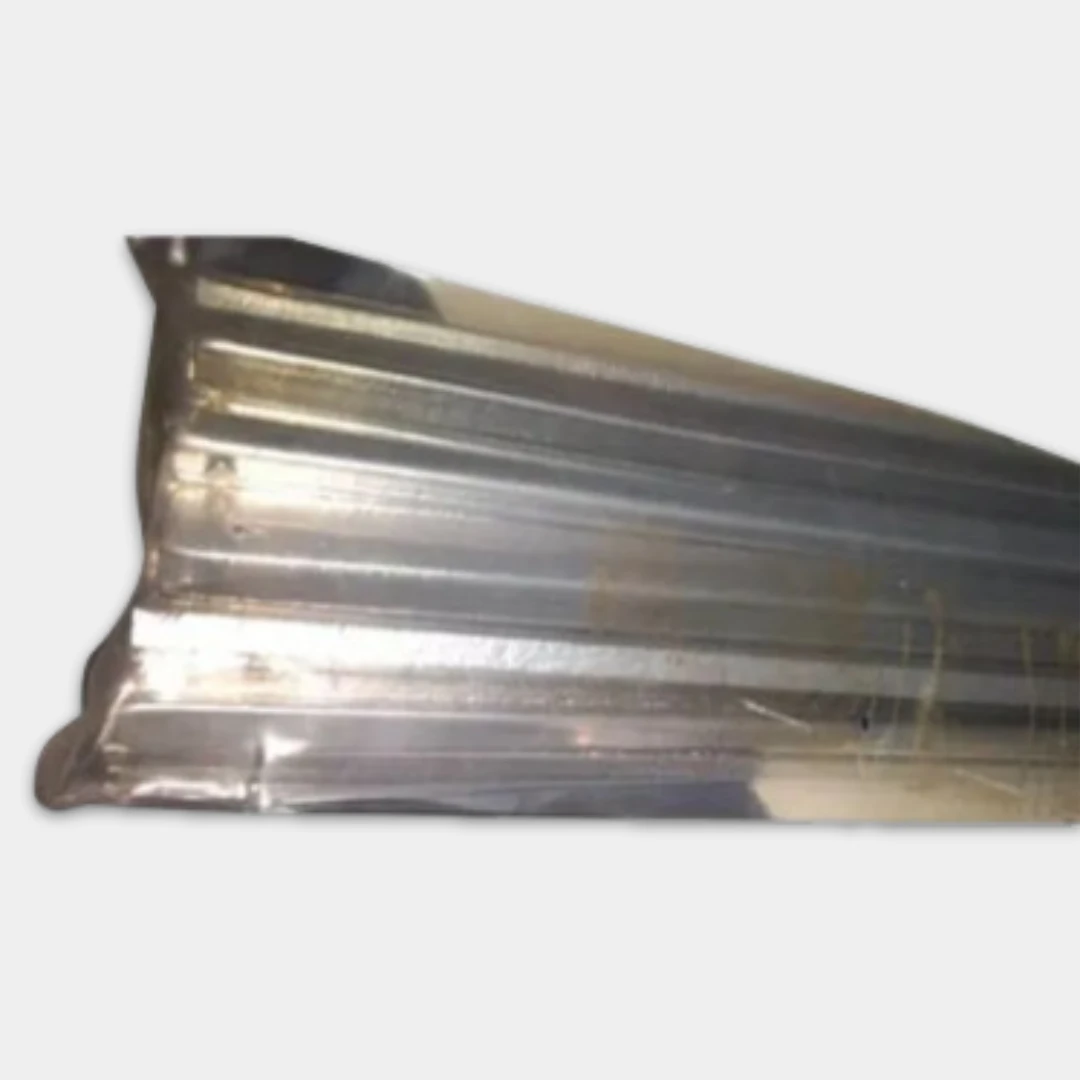
Dross is the cost line nobody prints on a website and every production head is measured on. It is the oxide skin that forms the instant molten solder meets air, and a wave is an oxide-generating machine by design: the pump agitates the surface, the wave breaks, and oxide is folded back down into the metal instead of sitting quietly on top. That is why a pot that is skimmed clean in the morning is drossing again by mid-shift.
Lead-free makes it worse, honestly and predictably. A lead-free bath runs hotter and tin oxidises faster than a tin-lead alloy at its lower working temperature, so the same line will typically throw more dross after a changeover than it did before. That is chemistry, not a supplier defect — but the solder you charge the pot with decides how much worse it gets.
Why "virgin metal" alone does not guarantee low dross
This is the part most suppliers skip. Purity of the incoming metal is necessary but not sufficient. If the alloying and casting process entraps oxide while the bar is being made, those suspended oxides go into your pot with the bar and start seeding dross the moment they hit the melt. A well-processed bar and a badly-processed bar can carry an identical assay on paper and behave completely differently in the bath. So the honest question to put to any solder bar supplier is not "is it virgin metal" but "how do you melt and cast it" — and only a manufacturer can answer that. ACE Power Systems melts, alloys and casts in-house, which is precisely why we can be asked.
The impurities that change how a pot behaves
- Copper — picked up continuously from boards and leads. Past roughly 0.1 percent in a tin-lead bath it brings sludge, dull gritty joints, poor drainage and nozzle problems.
- Iron — very small quantities, of the order of 0.002 percent, are enough to push dross formation up and fluidity down.
- Cadmium — around 0.002 percent begins affecting joint formation; near 0.005 percent it brings bridging, icicling and weaker joints.
- Antimony — a deliberate strengthener in antimonial grades, but an unwanted trace in electronics alloys where it can accelerate copper dissolution.
- Aluminium and zinc — the classic poisons. Even traces wreck wetting and leave gritty, dull joints.
IS 193 puts numbers on the ceilings for soft solder supplied in India: arsenic 0.05 percent maximum, iron 0.02 percent maximum, copper 0.05 percent maximum, with aluminium, zinc and cadmium not to be present in amounts that injuriously affect the properties, and a tin tolerance of plus or minus 0.5 percent on the nominal grade. If your specification is written to IS 193 or to J-STD-006 practice, send it with your enquiry rather than only a trade name, and we will come back to you against it. Send your grade and your monthly consumption and you will get a like-for-like quote, not a headline number.
Lead-Free Solder Bar (RoHS)
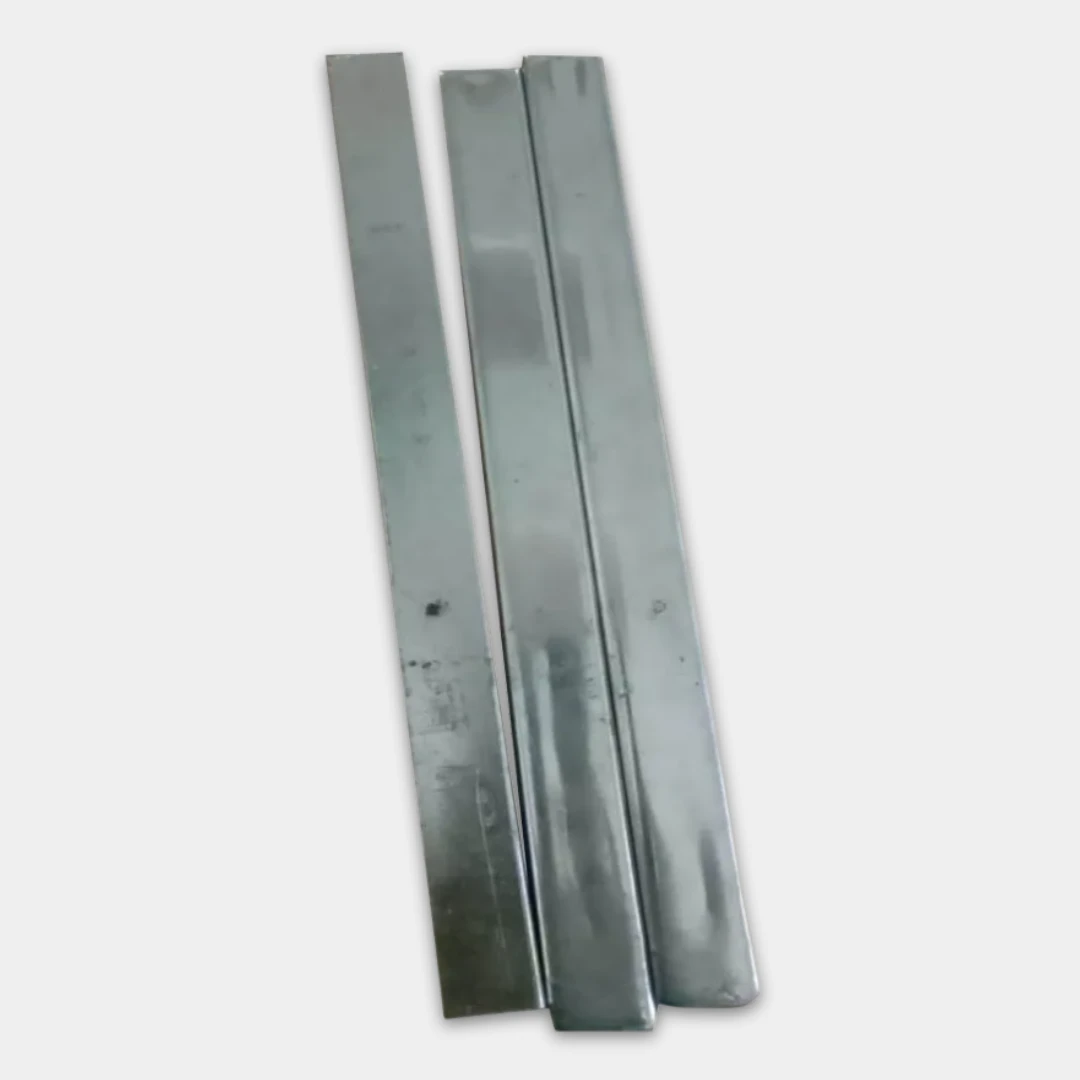
ACE Power Systems manufactures lead-free, RoHS-compliant solder bars alongside tin-lead grades. It is worth being precise about what that claim means, because a vague version of it is exactly what fails at your customer's audit.
In India, RoHS is enforced through the E-Waste (Management) Rules rather than as a standalone law. The limits in a homogeneous material are lead, mercury, hexavalent chromium, PBB and PBDE at 0.1 percent or less by weight, and cadmium at 0.01 percent or less. So "lead-free" is a threshold claim, not a zero-lead claim — SAC305 datasheets themselves state residual lead at 0.07 percent or lower. A supplier provides a declaration and an SDS; nobody is "REACH certified", and any solder bar supplier telling you otherwise is telling you something that does not exist.
Practically, plan the changeover as a process change, not a metal swap: the pot runs hotter, oxidation is faster, dross goes up, and the copper window your bath is held in changes. Tell us whether the lead-free documentation you need is for your own e-waste and EPR filing or for an export customer, and ask us what documentation we can supply with a lead-free consignment.
Purity, Batch Testing and Test Certificates
"High purity" is an adjective every supplier uses and no QA engineer accepts. What survives an audit is a number attached to a lot.
ACE Power Systems issues a batch spectro test certificate — a certificate of analysis — for the lot supplied, so the alloy in your pot is identifiable after it has been melted and there is a document to hand your customer's auditor. That is the difference between a claim and a record.
- Batch spectro test certificate / COA issued per lot supplied
- Alloy and batch identification travelling with the consignment
- Ask us what documentation we can supply with a lead-free consignment
- Send your written specification with the enquiry — IS 193 grade designation, J-STD-006 practice or your own internal spec — and we will come back to you on what we can supply
Not ready to move your whole monthly requirement? Send us the grade and the trial quantity you have in mind and we will revert — then run it on one line and check the certificate against your own bath analysis before you commit the pot.
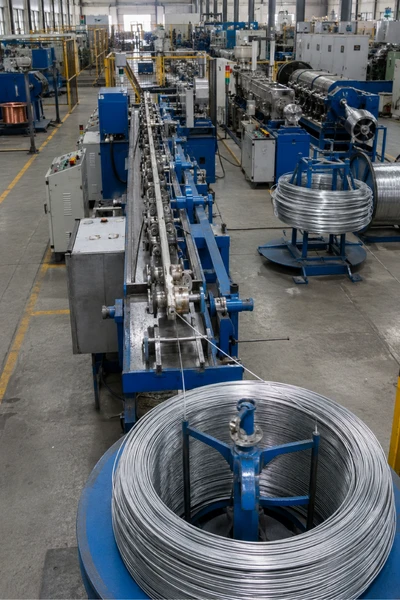
Industries Running Solder Bar Pots
Every one of these runs a bath that is topped up continuously, and every one of them worries about something slightly different.
Wave and Selective Lines in EMS Units
EMS and OEM production floors where a wave, fountain, selective or dip pot is live all shift. What they measure is bath stability across the shift, the dross rate the pot throws, and impurity drift as boards give up copper into the metal — plus a certificate their own customer's auditor will accept.
LED Driver and Module Lines
Driver and module pots consuming solder bar by the tonne, where metal lost to dross shows up as a monthly cost line rather than a technical detail. Holding pot temperature steady and wetting aluminium-core boards the same way every run is the other half of what these baths are judged on.
Automotive Electronics
Harness, ECU, lighting and sensor pots feeding joints that get thermally cycled under a bonnet for years. Traceability here is a bath question: which lot topped the pot up, when the changeover between grades happened, and how far copper pick-up had drifted by that point in the run.
Telecom and Networking Production
Fewer accounts, larger baths, tighter compliance files. The requirement is a pot held at a repeatable impurity level from one top-up to the next, with the paperwork behind each charge examined as closely as the joints coming off the line.
Tinning Baths in Electrical Equipment
Transformer, switchgear, motor and appliance plants running hot-dip tinning baths for winding leads, busbar, lugs and terminal hardware. A bath like this is charged and re-charged all day, so every piece of solder bar going in has to behave in the melt exactly as the last one did.
PCB Fabrication (HASL)
Bare-board fabricators whose HASL pot runs hot and continuously to coat copper pads. Pot temperature, drainage off the board and how quickly the surface drosses over are the working measures, and all three move with whatever the pot is being charged with.
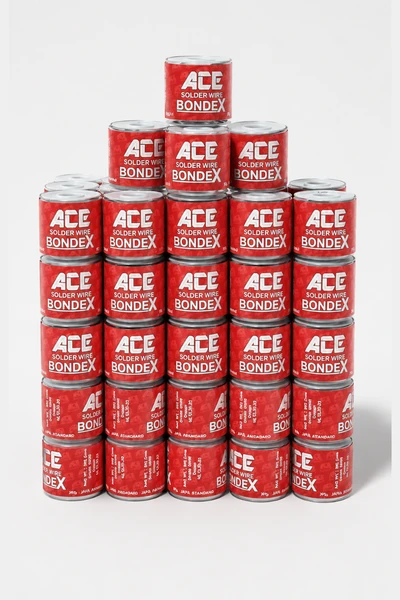
Packing, Bulk Supply and Delivery Across India
Solder is a consumable with no buffer. A pot that runs dry, or gets topped up mid-shift with a different supplier's metal, leaves you with a mixed and unqualified bath — which is a quality problem long before it is a purchasing problem.
ACE Power Systems has bulk supply capability and dispatches across India from Ahmedabad, Gujarat. We would rather set up a scheduled repeat supply against your monthly consumption than have you re-source in a hurry every few weeks, so send your consumption pattern along with your grade.
- Tell us the piece format and packing your feeder and your stores take when you send your requirement
- Scheduled, repeat bulk supply against a monthly requirement
- Single-source alloy supply, so you are not topping the bath up from a different origin each month
- Dispatch across India
Packing, quantities and commercial terms are quoted against your requirement — send it across and we will put it in writing.
Solder Bar Suppliers for Dealers and Distributors
Buying for resale or distribution rather than for your own pot? We supply dealers, distributors and re-sellers direct from our own manufacturing in Ahmedabad, Gujarat. Send us the territory you cover, the pot alloys your buyers keep asking for and the volume you expect to move in a month, and we will revert on bulk and dealer supply.
Solder Bar FAQs
Get a Solder Bar Quote
Send your requirement and we will come back to you on what we can supply. The faster you can give us these four things, the faster the quote comes back:
- Alloy or grade — 63/37, 60/40, 50/50, SAC305, Sn99.3Cu0.7, or your IS 193 designation
- Leaded or lead-free, and what lead-free documentation you need — for your own filing or for an export customer
- Monthly quantity and the piece format or packing your pot and feeder need
- Your city or state for dispatch
ACE Power Systems — Ahmedabad, Gujarat, India
Phone: +91 98240 24792
WhatsApp: 919824024792
Email: acepowersystem@gmail.com
We manufacture in-house, supply in bulk and dispatch across India. Trying us on one line first? Tell us the grade and the trial quantity you have in mind and we will come back to you.
Related Soldering Products
ACE Power Systems manufactures a full range of soldering consumables in Ahmedabad, Gujarat.
ACE Power Systems
- Mon · 09:00 AM to 6:00 PM
- Tue · 09:00 AM to 6:00PM
- Wed–Sat · 09:00 AM to 6:00 PM
- Sun · Closed